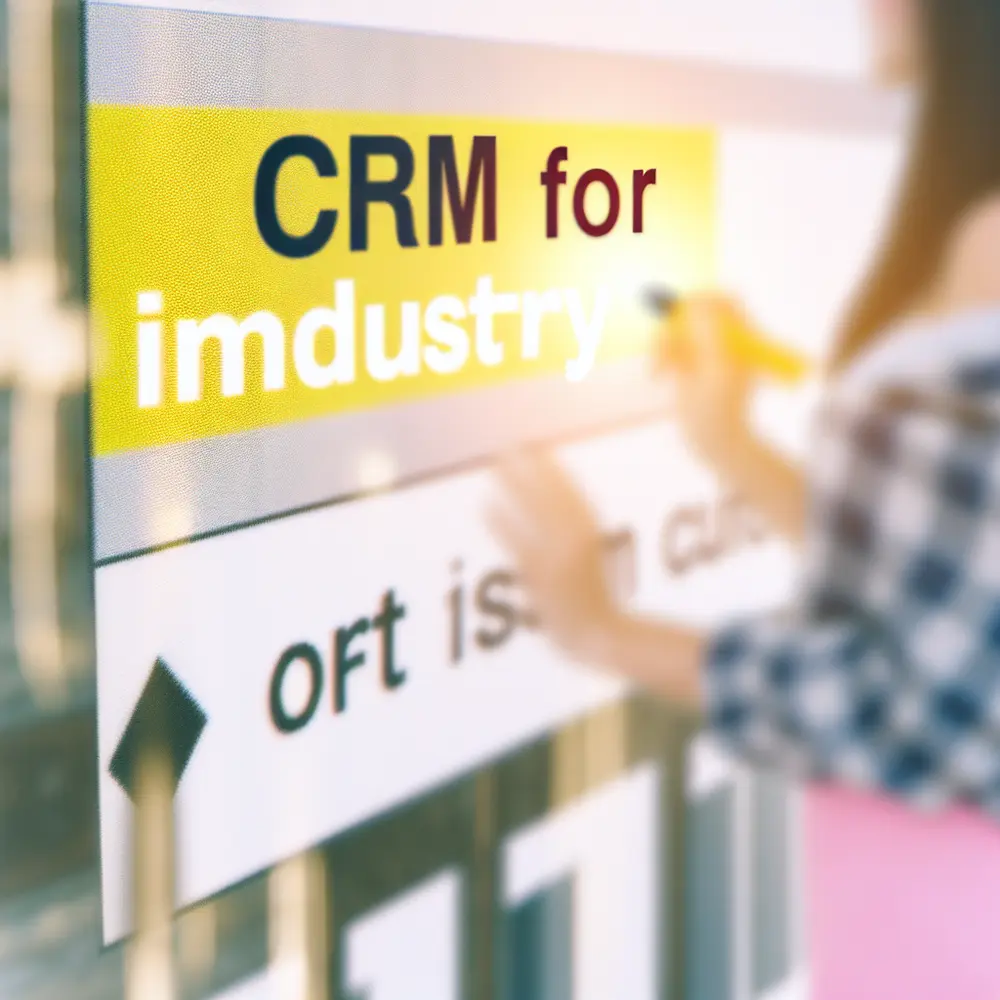
Do you understand the challenges your industry faces in customer management and sales optimization? In a dynamic market, continuous improvement and personalized customer service are crucial for success. The good news is that a specialized CRM can significantly transform these processes. Let’s explore how this solution can be an ally in your growth and competitiveness journey.
A CRM for industry is software designed to help companies in this sector manage their customer relationships, optimize sales, and ensure excellent customer service. You centralize relevant information, such as purchase history and interactions, preparing to offer more efficient and personalized service.
What is a CRM for Industry?
A CRM for industry is a tool designed to simplify customer management in the sector. By centralizing data, you facilitate tracking sales and interactions, resulting in more effective service. This leads to a considerable increase in customer satisfaction and business retention.
“After implementing the CRM, we achieved a 25% increase in budget closures. Analyzing historical data allowed us to predict trends and align our sales strategies.” – Director of Metalúrgica Alfa
The CRM system integrates various departments, improving communication and collaboration. This way, teams have access to real-time information, enhancing decision-making speed and problem-solving. For instance, Metalúrgica Beta managed to reduce its sales representatives’ response time to customers by 15% after integrating its CRM with field operations.
Customer management in the industry also benefits from automation. Repetitive tasks become more efficient. Têxtil Gamma Industry automated follow-up messages, resulting in a 20% increase in re-engagement with inactive customers.
Finally, a CRM for industry is crucial for building loyalty strategies. You establish open communication channels where feedback is valued, strengthening trust. Química Delta Industry used this approach and saw a 30% increase in customer loyalty within a year. Check out our content on crm.
Benefits of CRM for Customer Management in Industry
The CRM provides a complete view of customer relationships. You centralize data, which facilitates personalized service. The result? Increased satisfaction and customer loyalty. By recording every interaction, the team not only reduces errors but also becomes more agile and assertive in negotiations.
“Implementing the CRM in our Omega Foods company resulted in an 18% increase in sales by aligning commercial strategies with identified behaviors in data analyses.” – Sales Manager
- Increases operational efficiency by automating administrative tasks.
- Provides valuable insights to managers for dynamic adjustments to market needs.
- Ensures better relationships with customers through effective communication and constant feedback.
Increasing operational efficiency is another significant advantage. The CRM automates tasks that had consumed many work hours. The Máquinas Térmicas Eta company reduced its time spent on administrative tasks by 40%, allowing teams to focus more on sales and customer service.
“Using advanced CRM reports, we managed to adjust our product offerings, resulting in a 25% growth in direct sales.” – Commercial Director of Indústria de Componentes Sigma
Investing in a CRM is, therefore, more than an operational improvement; it’s a long-term growth strategy. Companies that adopt this solution transform their customer relationships and enhance their sales.
How CRM Can Optimize Sales in the Industry?
Implementing a CRM is crucial for modernizing customer management and enhancing sales. You gain a clear view of the customer journey, allowing you to quickly adjust your strategies. Additionally, the automation of manual processes increases the productivity of the sales team.
“The adoption of CRM at Construtora Eco resulted in a 22% increase in lead-to-sale conversions. Customer segmentation made our campaigns much more targeted and effective.” – Marketing Manager
- Internal communication benefits from real-time access to information.
- Sales and marketing work together, enhancing the customer experience.
- Continuous data analysis allows for proactive adjustments to strategies.
Continuous data analysis is a powerful asset. By identifying purchasing behaviors, Química Zeta adjusted its approaches according to market demands, resulting in a 15% increase in customer retention. Check out our content on 16 CRM Strategies to Increase Your Results.
Therefore, investing in a CRM goes beyond increasing sales; it’s about building solid and sustainable relationships, ensuring a promising future for your industry.
Criteria for Choosing the Ideal CRM Software for Your Industry
Choosing the right CRM is a decisive step in optimizing customer management. With numerous options available, you should focus on essential points that make a difference in practical application.
- Personalization should be a priority, adapting to your specific needs.
- Easy usability ensures quick acceptance among team members.
- Automation reduces repetitive tasks, allowing teams to focus on strategic actions.
- The scalability of the system is crucial for keeping up with the company’s growth.
- Analyze acquisition, maintenance, and upgrade costs to ensure a good investment.
“We customized our CRM system and observed a 20% improvement in productivity after adapting it to our operations.” – Manager of Muros & Afins Construction Company
The 11 Best CRM Systems for Industry in 2025
An effective CRM choice can revolutionize customer management, and knowing the best systems available in 2025 is essential. These software solutions should not only control data but, above all, enhance your production processes.
- CRM Alfa: Intuitive interface and efficient customization.
- CRM Omega: Robust and scalable, ideal for growing businesses.
- Platform Zeta: Focused on automation to boost conversion rates.
- CRM Delta: Exceptional technical support and effective features.
- System Theta: Easy integration with various platforms.
“The use of CRM Omega reduced our response time by 22%, allowing for agility in operations.” – Director of Beta Beverage Industry
Success Stories: Companies That Transformed Their Processes with CRM
Various industries have adopted CRM systems to enhance their operations. A notable example is Pet Food S.A., which observed a 35% increase in sales closures after implementing a specific CRM software. This transformation came from integrating customer data, allowing for more personalized strategies.
“With the CRM, we improved our service and reduced response time by 20% by integrating with our support system.” – CEO of Eletrhome
- Artisan Co: 30% increase in customer retention through constant feedback.
- Wellness: 45% ROI increase using analytical data to optimize campaigns.
These examples demonstrate that investing in a CRM is not just a technology decision; it’s a way to enhance business relationships and ensure your company remains competitive and innovative in the market.
Challenges in Implementing CRM in Industry and How to Overcome Them
Implementing a CRM can be challenging, but you can overcome them with the right approach. Resistance to change is common, so promoting a culture of innovation is essential. Present the benefits of working with more modern and efficient solutions, as seen in the Paper and Pulp Industry, which overcame initial barriers, increasing adoption by 40% after adequate training.
- Integrating the CRM with existing systems can create complications.
- Continuous training for the team is essential.
- Customizing the software should be a priority to meet specific needs.
- Measuring return on investment is necessary to adjust processes.
“Integrating our CRM with legacy systems allowed us to modernize operations and reduce transition time by 30%.” – Director of Metalúrgica Gamma
Future of CRM in Industry: Trends and Innovations
The future of CRM is full of essential innovations, such as integrating artificial intelligence and machine learning for increasingly complex data analysis. SmartGarages, a Window and Door Industry, already uses these technologies, identifying customer behavior patterns that improved their sales by 30%.
Personalizing service continues to be a priority. CRM systems are evolving to offer a tailored experience, reinforcing relationships, as seen in LuxJoy Cosmetics, which saw retention rates rise by adopting customized strategies. Check out our content on CRM for Franchises.
- Cloud-based CRMs offer flexibility and security.
- Process automation reduces repetitive tasks and optimizes the sales force.
- Predictive analytics provides a competitive edge, anticipating demands.
“Switching to a cloud-based CRM platform resulted in a 25% increase in team efficiency.” – Director of Indústria de Impacto Leve
Integrating CRM with Other Business Systems
Integrating CRM with other systems is fundamental for effective management. This connection allows for centralizing information, improving communication and decision-making. TecCell, a mobile phone manufacturer, utilized this strategy and noticed a 20% improvement in customer response efficiency.
- Uniting CRM with inventory management software aligns production and demand.
- Automation throughout the process enhances campaign segmentation.
- Data analyses generated by integration provide valuable insights.
“Integrating our CRM with other systems reduced our expenses by 30% and increased operational agility.” – Manager of Muñoz Food Industry
Tips for Training and Adoption of CRM in Your Team
Training is crucial in implementing a CRM. To encourage adoption, organize practical sessions where team members can explore the tool in a simulated environment. Nova Think Pharmaceutical Industry used this approach and achieved 95% acceptance among employees.
- Segment training according to roles of team members to ensure adequate training.
- Promote an environment for questions and feedback to minimize future issues.
- Connecting the CRM’s value to sales optimization is crucial for acceptance.
- Offering continuous support reinforces learning and utilization of the tool.
“After clarifying doubts in open meetings, we increased confidence in the new tool by 30%.” – Manager of Fino & Prenda Textile Industry
Why Invest in a CRM for Your Industry?
Investing in a CRM for your industry is a strategic choice. You transform customer management and optimize sales, enabling superior service. This results in more effective processes in a competitive market. The CRM becomes your ally in sustainable growth.
“With real-time access to customer information, our response capacity increased by 30%, providing a competitive edge.” – Director of Química Polymers Industry
Let’s sell and serve better together?
- Sales optimization occurs through process automation, allowing the team to focus on strategic activities.
- Integration with technologies, such as CRM integrated with WhatsApp, offers effective and rapid communication.
- Paying attention to sector-specific functionalities is essential for the success of the investment.
Finally, when analyzing the software functionalities, pay attention to your sector’s specifics. With the right CRM, you prepare to face challenges and seize opportunities. Therefore, investing in a CRM for your industry is not just an improvement; it’s essential for ensuring innovation and growth in today’s market.