Do you want to enhance the effectiveness of your digital marketing strategy? The content marketing funnel is key to guiding your leads from awareness to conversion. However, many professionals struggle to manage this journey. In this article, you will learn how to optimize each stage of the funnel, attract more customers, and improve your conversion rates.
Understanding the different phases of the marketing funnel—top, middle, and bottom—is crucial. Each stage requires different types of content and strategies. If you fail to adapt to these nuances, you may miss significant engagement and conversion opportunities. Therefore, let’s explore the best practices for each stage.
Are you ready to sell and serve better together? By implementing the strategies discussed here, you will not only improve your funnel but also provide a richer experience for your leads. So, get ready to make adjustments and see positive results in your marketing efficiency!
The Content Marketing Funnel: Structure and Importance
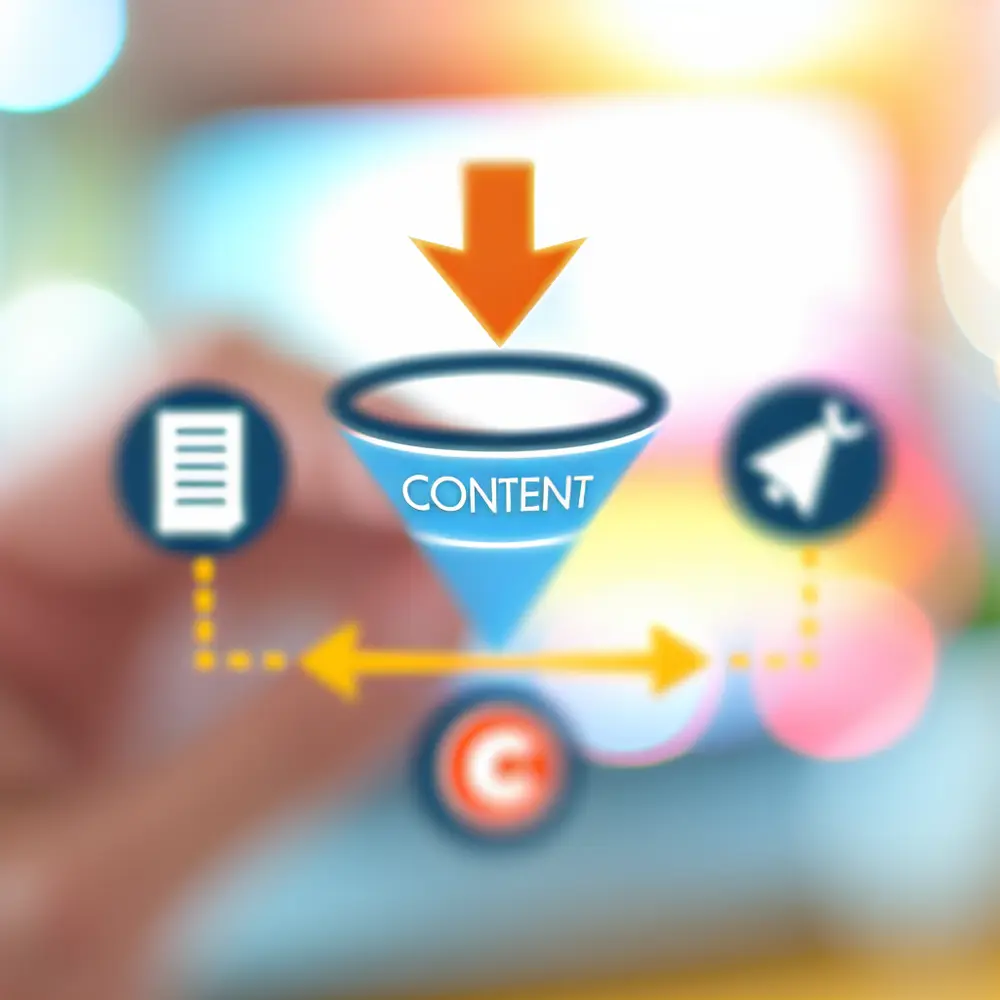
The content marketing funnel represents the path consumers take to become customers. This path is divided into three main stages: top, middle, and bottom of the funnel. Each stage has distinct objectives and characteristics.
At the top of the funnel, you attract the audience’s attention. The goal here is to create awareness. Create educational content, such as blogs and videos, that answer common consumer questions. This generates interest and encourages exploration of your brand. Clínica Vitalis achieved a 30% increase in website traffic by developing a blog with health tips.
In the second phase, the focus is on consideration. Leads are already familiar with your brand and seek more information. Producing eBooks and webinars strengthens their trust in your proposition. Transportadora Prime noticed a 25% increase in lead retention after implementing webinars that clarified logistics questions.
At the bottom of the funnel, the priority is conversion. Produce content that showcases success stories and social proof. Loja Online DaJu offered exclusive promotions, resulting in a 15% conversion of leads to customers in one month.
Monitoring the performance of content throughout the funnel is essential. Track metrics and data to refine your strategies. The implementation of a bulk messaging trigger on WhatsApp has helped many companies maintain dynamic contact, increasing their conversion rates. Check out our content on marketing.
Overview of the Content Marketing Funnel Stages
The funnel is divided into three stages: top, middle, and bottom. Each phase helps guide the customer from awareness to conversion. Understanding these stages is crucial for building an effective strategy.
At the top of the funnel, you attract attention with informative content. Blog posts and educational videos stand out. Using SEO and relevant keywords is essential to increase visibility. This way, engage your target audience and improve your chances of conversion.
As you move to the middle of the funnel, the strategy should focus on nurturing and engaging leads. Rich materials, such as eBooks and case studies, are fundamental for this purpose. Sending newsletters also helps maintain constant contact. Calçados Trend saw a 20% increase in interactions with leads after starting a series of emails with exclusive tips.
At the bottom of the funnel, it’s time to convert. Use customer testimonials and social proof to reinforce the purchase decision. An optimized experience results in significantly higher conversion rates. Fábrica de Móveis Artefatos increased its sales closures by 30% after implementing clear calls to action.
Integrate communication tools, such as a bulk WhatsApp messaging trigger, to optimize interaction. This approach creates a closer relationship with the consumer, resulting in better success rates at each stage of the funnel.
Practical Tips for Each Stage of the Funnel
1. Top of Funnel: Attraction
Capture visitors with content such as blogs and infographics that are relevant to your audience. Focus on SEO and promotion on social media. In one campaign, Academia Fit used short videos to explain exercises, attracting 40% more views than other content.
2. Middle of Funnel: Consideration
After attracting leads, engage them. Offer relevant eBooks and webinars. Automate emails to maintain contact and provide information tailored to their needs. Consultoria TechUp saw a 15% growth in qualified leads by conducting webinars that addressed industry trends. Using remote service tools is also a good strategy. Check out our content on 13 Effective Promotion Strategies.
3. Bottom of Funnel: Decision
Facilitate lead decisions by presenting social proof and offers. Develop landing pages that favor conversion by adding direct CTAs. Loja de Cursos Online Educar optimized its pages and achieved a 25% increase in conversions in just one week.
4. Post-Conversion: Retention
Continue interaction after conversion. Send tutorials and tips on product usage. Collecting feedback is essential for improving your offering. Apps descomplicados saw a 20% increase in retention by following this approach.
5. Optimization and Evaluation
Analyze performance and adjust strategies based on metrics. Continuous learning is essential for an effective funnel. Ambientes Aconchegantes managed to increase its conversion rate by 10% by adjusting its content based on lead feedback.
Are you ready to sell and serve better together?
Top of Funnel (ToFu): Attracting and Engaging
The Top of Funnel (ToFu) stage is vital. Provide relevant information that sparks curiosity. Use SEO to ensure visibility, along with free guides and eBooks in exchange for contact information.
Using stories can engage the audience more. Rede de Consultórios Médicos Cuide-se shared patient success stories, increasing interaction by 35% on social media.
Implementing a bulk WhatsApp messaging trigger helps keep the audience updated and engaged. This direct contact can transform temporary leads into loyal customers. Check out our content on Mother’s Day Campaigns.
Middle of Funnel (MoFu): Nurturing and Relationship
In the Middle of Funnel (MoFu), deepen relationships. Offer eBooks and webinars that educate about your proposals. Personalizing content can increase relevance. Serviços Jurídicos Bartoli saw engagement rise by 25% after personalizing its marketing materials.
Maintaining constant contact is essential. Use social media and email marketing. Invite the audience to take specific actions, such as booking a conversation or accessing exclusive resources.
Bottom of Funnel (BoFu): Conversion and Sale
In the Bottom of Funnel (BoFu), focus on converting leads into customers. Offer social proof such as testimonials and case studies. The purchasing experience should be simplified.
Use clear CTAs and streamline the buying process. Produto Petvalue increased its conversions by 30% with an optimized buying experience and limited-time promotions.
A bulk WhatsApp messaging trigger can be an excellent tool to facilitate communication. This helps keep your product in the spotlight and makes the buying experience less complicated.
How to Do It: Step by Step to Build Your Content Marketing Funnel
Start by identifying your audience and their needs. In the awareness phase, create content that addresses relevant topics. Keep a clear plan, mapping each stage of the funnel.
In the consideration phase, provide rich materials and promote them. Ensure a list of qualified leads for follow-up later. During the decision phase, reinforce credibility with testimonials and reviews. Check out our content on Digital Marketing Channels.
Don’t underestimate the importance of performance analysis. Use metrics to adjust your strategies and continuously improve your funnel.
Common Mistakes to Avoid in the Content Marketing Funnel
Avoid not knowing your target audience. Create content that truly resonates with their needs. Ignoring planning can hinder progress through the funnel. Always set clear objectives for each stage.
Do not dismiss data analysis. Monitor metrics that help in the continuous improvement of the strategy. Avoid repetitive content in the journey; adjust it as necessary and optimize the available CTAs at each stage.
Useful Tools and Resources to Implement Your Content Marketing Funnel
Use Canva and Google Docs for content creation. SEO tools like SEMrush and Ahrefs are essential to increase your content visibility. Manage your social media with Hootsuite and Buffer.
Automate your marketing with HubSpot and Mailchimp. Analyzing metrics through Google Analytics guides continuous adjustments. A customer service system can also be a powerful tool!
The Importance of Continuous Improvement in the Content Marketing Funnel
Constantly analyze metrics. User feedback is essential to understand their needs. Update old content to increase its relevance and keep it optimized for SEO.
Are you ready to sell and serve better together? Test new formats and content. Constant innovation is essential to stay competitive in the market. Continuous improvement in your content marketing funnel is the key to success!