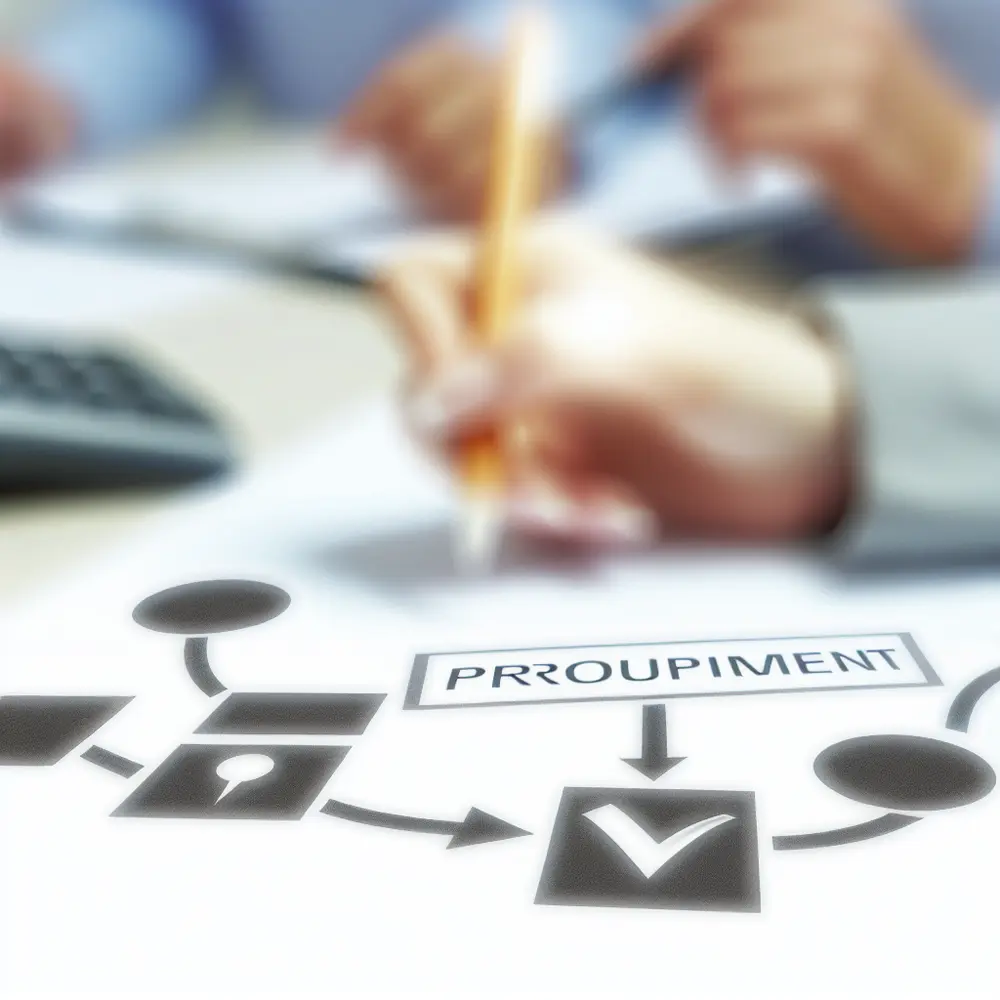
Have you ever felt lost in the purchasing process of your company? Lack of clarity and organization can directly affect your team’s efficiency and productivity. By implementing a purchase process flowchart, you gain a visual tool that sheds light on each step to be followed.
A flowchart not only visualizes the workflow but also helps identify bottlenecks and optimize the time spent on transactions. By engaging your team in this process, you create a collaborative space that fosters efficiency and organization. Let’s explore together how to transform your purchasing processes!
Are we ready to sell and serve better together? In this article, you will discover how to create an effective flowchart, the benefits of this practice, and some tips to avoid common mistakes. Get ready to enhance your purchasing operations and achieve more satisfactory results for your company.
Understanding the Purchase Process Flowchart
The purchase process flowchart is an essential visual tool that facilitates understanding the steps involved in acquiring products or services. It allows you to visualize and analyze each phase of the process, improving the organization and efficiency of your operations.
When creating a flowchart, start by mapping the key steps that make up the purchasing process. Identify everything from the purchase request to the delivery of the product or service. Each step should be graphically represented, helping to identify areas for improvement.
Consider Vitalis Clinic, which mapped its purchasing processes and managed to reduce order closing time by 20%. This visualization of workflows allowed them to see bottlenecks and eliminate redundancies, resulting in increased productivity.
It is crucial to suggest a clear standard of symbols to ensure uniformity in the flowchart. Use specific shapes for actions, such as rectangles for activities and diamonds for decisions. This organization facilitates communication between teams.
Including responsible parties for each step of the flow is also crucial. Clearly assigning responsibilities increases efficiency, avoiding confusion about assignments. This helps in accountability, especially in cases of errors or delays.
Finally, digitizing the flowchart allows for constant updates and real-time sharing. Prime Transport, after adopting a digital system for its flowchart, saw a 15% increase in operational efficiency. This constant alignment contributes to a culture of continuous improvement. Also, check out our content on nexloo. Also, check out our content on nexloo.
Benefits of an Organized Purchase Process Flowchart
A well-crafted flowchart is fundamental to ensuring efficiency in purchasing operations. Visualizing the steps facilitates analysis and identification of areas for improvement. Additionally, it contributes to optimizing time and resources, resulting in savings.
An organized flowchart provides clarity on roles and responsibilities. ConteMix Accounting Office noticed that, with clearly defined roles, there was a 30% reduction in communication failures, increasing team cohesion.
Efficiency can also be enhanced through automation of steps, such as requests and approvals. The Nexloo platform, for example, helped Indústria Alvo speed up this process, ensuring a more agile workflow.
With a clear flowchart, managers can monitor and control activities effectively. This enables quick identification of bottlenecks based on data and implementation of corrective actions, increasing process effectiveness.
Finally, a flowchart supports the adaptability of the purchasing process. Digital Market, by adjusting its flow in response to new market demands, managed to increase its response capacity by 25%, ensuring competitiveness.
Practical Tips for Creating Your Purchase Process Flowchart
Creating an effective flowchart is essential for ensuring organization in supply management. Here are some practical tips to help you create a useful and efficient flowchart.
1. Define the Goals of the Flowchart
Before building the flowchart, clearly define the goals to be achieved. Ask yourself what you want to optimize or organize. From a clear vision, draft an outline with steps like request, approval, and receipt.
2. Map the Steps of the Process
Carefully map each step. Use rectangles for processes, diamonds for decisions, and arrows to indicate flow. This organization helps identify relevant activities and possible redundancies. Also, check out our content on 12 Tips on How to Sell in Retail in 2023 and Boost Your Sales. Also, check out our content on 12 Tips on How to Sell in Retail in 2023 and Boost Your Sales.
3. Involve the Team
Maximize efficiency by involving your team in the flowchart creation. Meetings to discuss mapping and collect feedback ensure everyone is aligned and committed.
4. Review and Continuously Improve
After implementing the flowchart, review it regularly. Monitor efficiency and adjust as necessary. Evolving the flowchart should be a continuous practice to respond to changes in the business environment.
Tools and Resources for Creating Effective Flowcharts
Creating an effective flowchart is vital for improving efficiency in operations. Here are some tools that facilitate this task.
Tools like Lucidchart, Visio, and Draw.io offer intuitive interfaces and real-time collaboration. Saúde Pharmacy, for example, used Lucidchart to digitize its processes, improving communication between teams and increasing efficiency by 20%.
In addition to design software, use project management platforms like Trello or Asana, which organize each step of the process and facilitate progress tracking.
Pre-defined templates in flowchart tools save time, allowing for customizations according to your needs. Indústria Novo Futuro gained 15% more time in creating its flowcharts using templates provided by the software.
To enhance understanding, use visual elements that improve readability. Colorful diagrams and icons help with quicker and more effective identification of steps.
Case Studies: Efficient Flowcharts in Action
Implementing a purchase process flowchart brings significant benefits. Here are some examples of companies that successfully adopted this practice. Also, check out our content on selling more. Also, check out our content on 10 Killer Tips to Become a Sales Manager.
A technology company revamped its purchasing flow and, by adopting a detailed flowchart, increased efficiency by 30%, halving delivery times.
An food industry company, by optimizing its flowchart, eliminated redundant steps and improved internal communication, resulting in a 25% increase in overall efficiency.
A retail chain, facing high operational costs, mapped its purchasing processes, enabling them to identify new savings and reduce expenses by 15% through a well-organized structure.
Other companies reported improvements in team engagement after adopting flowcharts. This increase in morale translated into more innovations and agility in proposed solutions.
Common Mistakes in Creating Flowcharts and How to Avoid Them
While creating flowcharts is essential, many face mistakes that compromise efficiency. Here are the main ones and how to avoid them.
One of the most common mistakes is lack of clarity in objectives. Without a precise definition, the flowchart can become confusing. Clearly define what you aim to achieve before starting.
Information overload is also a trap. Limit the steps to only the relevant ones, facilitating visualization and understanding.
Choosing the wrong symbols and shapes can cause confusion. Use a standardized notation, such as BPMN, to ensure everyone quickly understands the steps. Also, check out our content on what is WhatsApp API? 12 Tools + [Ultimate Guide]. Also, check out our content on 10 Factors That Influence Consumer Behavior.
Not reviewing the flowchart is another crucial mistake. Conduct reviews with the team to identify easily solvable issues.
Finally, seek feedback from end-users. Involving executors in the process ensures that solutions are practical.
Transforming Purchasing Processes Through the Flowchart
Adopting a purchase process flowchart is an effective strategy to enhance your organizational efficiency. This visual resource simplifies understanding the steps involved and improves your operations.
Identify the essential steps of the purchasing process and represent them sequentially in the flowchart. This way, you avoid communication failures and ensure everyone knows their responsibilities.
Continuous analysis of the flowchart allows for dynamic adjustments. Regular monitoring can help your team adapt quickly, maintaining efficiency even in times of change.
Finally, use tools like Nexloo to facilitate the creation and management of flowcharts. By integrating this technology into your daily routine, you transform your purchasing processes into a more organized and efficient operation.
Are we ready to sell and serve better together? For more information on how to improve your customer service and purchasing processes, visit the Nexloo Customer Service Platform.